Vision & Roadmap

Vision & Roadmap

Ctrl Shift is being built with a long-term vision: start with a focused, high-quality pilot program and grow into a community-based technology hub that expands access, builds skills, and creates opportunity for underserved youth across Chicago.

Our roadmap reflects a disciplined, step-by-step approach, growing only when the model is proven, the demand is real, and the foundation is strong.

Year 1
Year 1: Pilot Program (2026)
Focus: Prove the model with one strong, high-quality cohort.
  • Launch a single Tech Accelerator cohort serving approximately 24 students ages 13–15
  • Deliver an 8-week, in-person program focused on AI tools, digital skills, and team-based project work
  • Introduce a pilot Mentor Fellowship, pairing college students with student teams for guidance and support
  • Host a final presentation event where students showcase projects to families, community members, and supporters
  • Capture results, testimonials, and student outcomes to validate and refine the program
Year 2: Expansion (2027)
Focus: Repeat the model and begin building a student pipeline.
  • Expand to two cohorts per year, reaching approximately 40–50 students annually
  • Launch Tech Spark Workshops, short school-based sessions lasting 2–3 hours that introduce students to AI, digital tools, and technology pathways
  • Use workshops as an entry point to identify and recruit future Tech Accelerator participants
  • Grow the Mentor Fellowship to support additional cohorts while introducing early professional development for mentors, including leadership exposure, structured responsibilities, and real-world team guidance experience
  • Begin building a reusable curriculum library, including lesson plans, project examples, and training materials
Year 2
Year 3
Year 3: Multi-Neighborhood Growth (2028)
Focus: Expand reach and prove the model across multiple communities.
  • Deliver programs in two different Chicago neighborhoods through school and community partnerships
  • Serve approximately 75–100 students annually across multiple cohorts
  • Expand Tech Spark Workshops to 20+ schools, strengthening partnerships and referral pathways
  • Introduce a returning student pathway, allowing past participants to continue developing skills or support new cohorts
  • Continue evolving the Mentor Fellowship into a more defined professional development experience, with increased expectations, structured engagement, and early mentor development opportunities
Year 4: Program Maturity (2029)
Focus: Transition into a structured, multi-tier program model.
  • Introduce longer-format programs up to 16 weeks to deepen learning and project development
  • Establish clear program tiers:
    • Tech Spark for introductory exposure
    • Tech Accelerator as the core cohort program
    • Advanced or extended programs for returning students
  • Formalize the Mentor Fellowship as a structured development program with training, expectations, and leadership opportunities
  • Provide more opportunities for students to present their work through showcases, demo days, and community events
  • Serve approximately 125–150 students across programs
Year 4
Year 5
Year 5: Program Hub (2030)
Focus: Establish a consistent physical presence.
  • Secure a leased program space to serve as a central hub for classes, mentoring, and events
  • Operate programming multiple days per week, supporting different student groups and activities
  • Introduce open lab hours, where students can work on projects, collaborate, and receive mentor support outside of structured sessions
  • Expand the Mentor Fellowship to 20–30 participants with more defined leadership and development opportunities
  • Launch pilot parent and family workshops to increase digital literacy and engagement at home
  • Serve approximately 175–200 students annually across programs
Year 6: Community Expansion (2031)
Focus: Strengthen the hub and expand community impact.
  • Increase utilization of the program space with more consistent, multi-day programming
  • Expand student reach to approximately 225–250 participants annually
  • Grow the Mentor Fellowship into a more structured, multi-year professional development pathway
  • Expand family and community programming to deepen engagement beyond students
  • Demonstrate sustained demand, participation, and operational stability in preparation for long-term facility investment
Year 6
Year 7
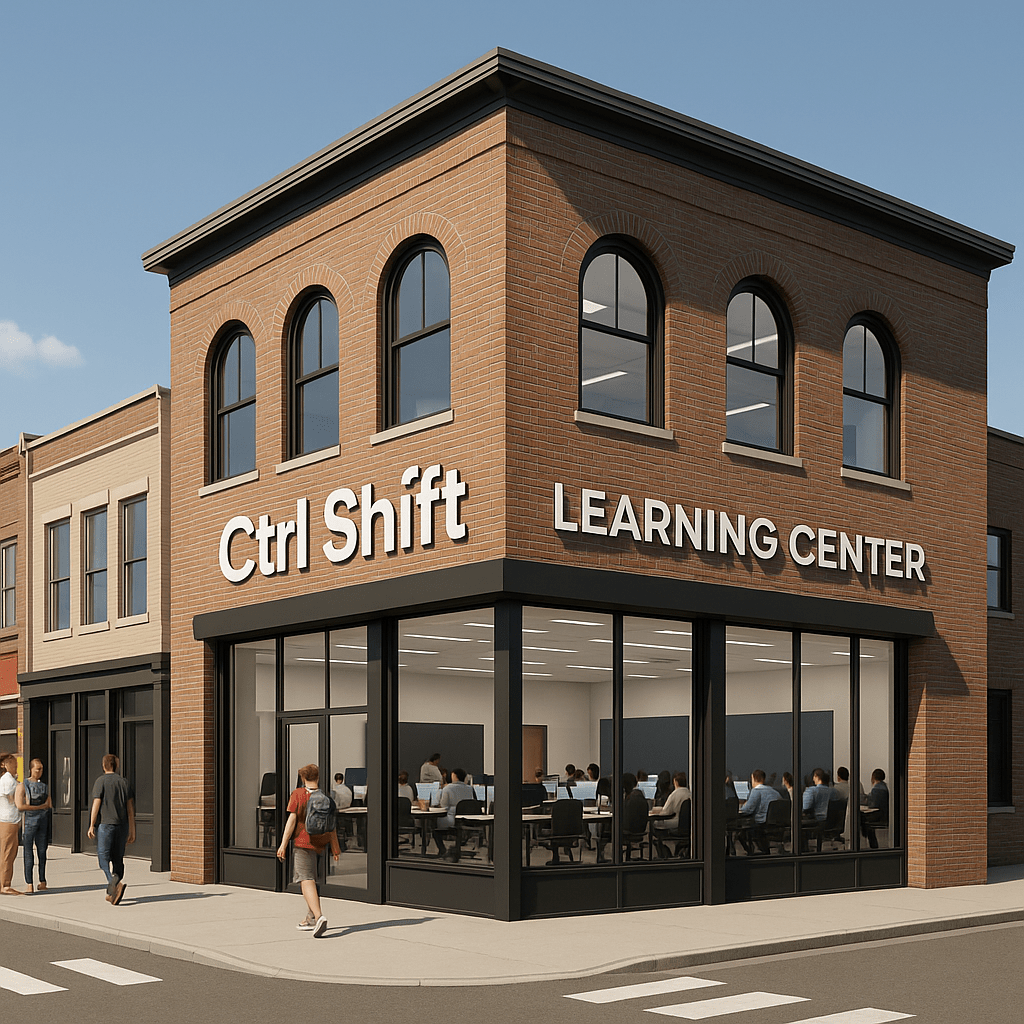
Year 7: Permanent Facility (2032)
Focus: Establish a long-term home and institutional presence.
  • Acquire a permanent facility if demand, funding, and utilization support it
  • Create a dedicated space for classrooms, project work, mentorship, and community events
  • Serve approximately 250–300 students annually across multiple program tiers
  • Expand offerings to include youth programs, mentor development, and family engagement under one roof
  • Establish Ctrl Shift as a recognized community-based technology and leadership development organization in Chicago

Our Vision

Ctrl Shift is being built with a long-term vision: start with a focused, high-quality pilot program and grow into a community-based technology hub that expands access, builds skills, and creates opportunity for underserved youth across Chicago. Our roadmap reflects a disciplined, step-by-step approach, growing only when the model is proven, the demand is real, and the foundation is strong.